Blog

lm studio

Unlock Local LLM Power on Your Desktop with LM Studio

As large language models continue to transform how people work, build software, and interact with information, there has been a growing interest in running AI locally rather than relying entirely on cloud-based providers. While services such as ChatGPT, Claude, and Gemini have made artificial intelligence accessible to millions of users, they all depend on remote […]

Unlock Local LLM Power on Your Desktop with LM Studio Read More »

claude code vs cursor

Claude Code vs Cursor: A Head-to-Head Comparison

AI coding tools have evolved from simple autocomplete assistants into fully autonomous software engineering agents. Today, developers can ask an AI to create features, refactor entire codebases, generate tests, fix bugs, and even navigate large repositories with minimal human intervention. Two tools currently dominating the conversation are Claude Code and Cursor. If you’ve spent any

Claude Code vs Cursor: A Head-to-Head Comparison Read More »

autoresearch

AutoResearch – The Open-Source Project Turning AI into a Scientist

Artificial intelligence is rapidly changing how software is built, tested, and improved. Over the past few years, we’ve seen AI evolve from simple code assistants into sophisticated agents capable of handling increasingly complex tasks with minimal human supervision. One of the latest examples of this evolution is AutoResearch, an open-source project introduced by AI researcher

AutoResearch – The Open-Source Project Turning AI into a Scientist Read More »

nanochat

NanoChat: Andrej Karpathy’s $100 ChatGPT Project

Large language models have become one of the most important technologies in modern software development. However, most people only interact with AI through products like ChatGPT, Claude, or Gemini without understanding what happens behind the scenes. This is exactly the problem that NanoChat aims to solve. Created by renowned AI researcher Andrej Karpathy, NanoChat is

NanoChat: Andrej Karpathy’s $100 ChatGPT Project Read More »

mcp vs api

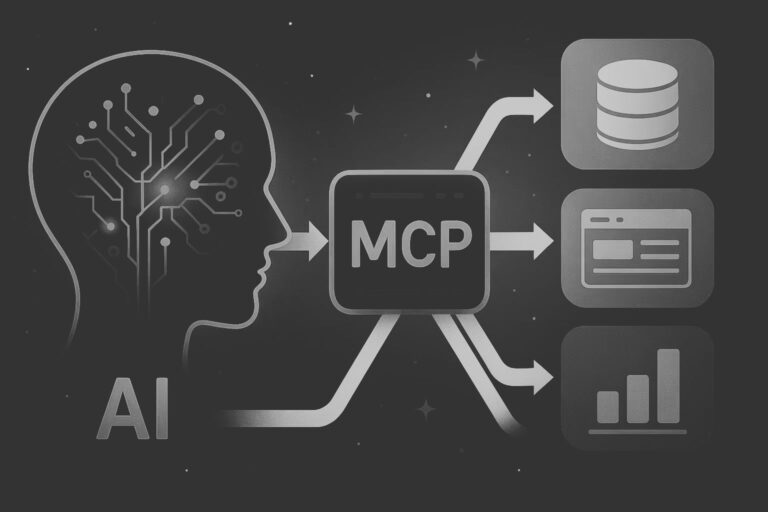
MCP vs API – Which One is Right for Your AI Project?

As AI agents become more capable, developers are increasingly encountering a new architectural decision: should a system expose functionality through traditional APIs, or should it implement the Model Context Protocol (MCP)? The discussion has become particularly relevant as platforms like Claude, Cursor, OpenAI, and other agent frameworks begin adopting MCP as a standardized way for

MCP vs API – Which One is Right for Your AI Project? Read More »

mastercard agent pay

Mastercard Agent Pay: The Catalyst Bringing AI Agents and Agentic Commerce into the Real Economy

Artificial intelligence has spent the last few years learning how to reason, write, analyze information, and automate increasingly complex tasks. Yet despite all of these advancements, AI agents have remained largely confined to the digital world. They could provide recommendations and execute workflows, but they couldn’t independently participate in the economy. That is beginning to

Mastercard Agent Pay: The Catalyst Bringing AI Agents and Agentic Commerce into the Real Economy Read More »

llm wiki

LLM Wiki Explained: What It Is, How It Works, and the Future of AI Agent Memory

One of the biggest challenges in AI today is not building smarter models. It’s building systems that can remember. I have seen this over and over again throughout my years of experience as an AI engineer.  Over the past year, I’ve spent a significant amount of time exploring memory architectures for AI agents. Like many

LLM Wiki Explained: What It Is, How It Works, and the Future of AI Agent Memory Read More »

llm evals

LLM Evals Explained: How to Measure Whether Your AI Is Actually Working

Large Language Models (LLMs) have become remarkably capable over the past few years. They can write articles, answer complex questions, generate software code, summarize documents, and even operate as autonomous agents that interact with tools and external systems. But as impressive as these capabilities are, they introduce a new challenge: how do you know whether

LLM Evals Explained: How to Measure Whether Your AI Is Actually Working Read More »

pytorch vs tensorflow

PyTorch vs TensorFlow: Which Framework Should You Actually Choose?

If you’ve spent any time in the machine learning world, you’ve undoubtedly run into the ultimate heavyweight matchup: PyTorch vs TensorFlow. For years, the tech community relied on a simple, comforting cliché: “PyTorch is for research, and TensorFlow is for production.” But as we move through 2026, that old boundary has completely dissolved. PyTorch has

PyTorch vs TensorFlow: Which Framework Should You Actually Choose? Read More »

llama.cpp

How to Migrate from Ollama to Llama.cpp: An AI Engineer’s Guide

As an AI engineer, my daily life revolves around testing products, breaking local builds, optimizing workflows, and architecture design. For a long time, my absolute go-to for rapid prototyping was Ollama. It’s incredibly slick, hides the messy plumbing, manages models gracefully, and just works. But as you start pushing local applications closer to production, building

How to Migrate from Ollama to Llama.cpp: An AI Engineer’s Guide Read More »

Scroll to Top