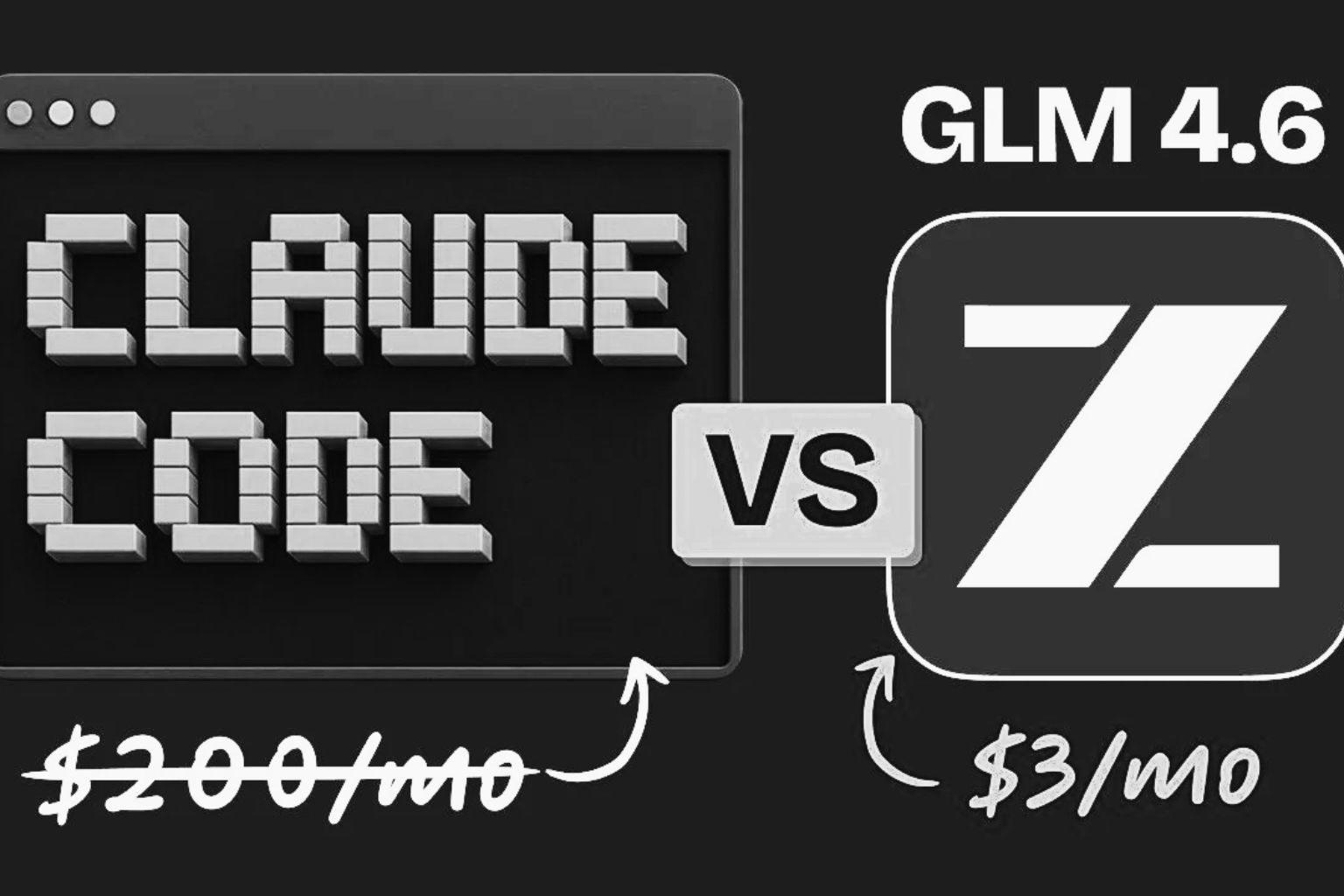
If you are comparing GLM Coding Plan vs Claude Code in 2026, the biggest difference is no longer simply model quality. Z.ai now sells a credit-metered coding subscription centered on GLM-5.3 that can power supported coding agents including Claude Code, Cursor, Cline, Roo Code, Kilo Code and OpenCode. Anthropic, meanwhile, offers Claude Code as the native coding environment for its own Claude models through consumer subscriptions, team plans and API-based access.
That means you can use GLM inside Claude Code, but GLM is not a drop-in copy of Claude. For U.S. and other global developers, the practical comparison is between Z.ai’s lower-cost, multi-tool Coding Plan and Anthropic’s first-party Claude Code stack. The right fit depends on the models you want, how much agent usage you need, whether open weights matter, and which privacy terms apply to your account.
Pricing and product details below were checked on September 26, 2026. Both providers can change plans, limits and model availability, so confirm the linked official pages before subscribing.
GLM Coding Plan vs Claude Code: The Short Answer
| Area | GLM Coding Plan | Claude Code |
|---|---|---|
| What it is | Z.ai subscription for GLM coding models and supported agent tools | Anthropic’s first-party coding agent for Claude models |
| Current coding model focus | GLM-5.3 and GLM-5.3-Flash | Current Claude models available to the user’s plan/account |
| Entry paid price checked | ZCode displayed Lite at $12.60/month promotional pricing, with $18 listed as the standard price | Claude Pro is $20/month, or $200/year ($17/month equivalent) |
| Usage system | 5-hour and weekly credit allowances; model and MCP calls consume credits | Session and weekly usage limits on consumer plans; optional paid usage credits after included usage is exhausted |
| Agent compatibility | Designed to work across multiple supported coding tools, including Claude Code | Native Claude Code terminal/IDE experience, including supported IDE integrations |
| Open-weight option | Yes. GLM-5.3 weights are available under the GLM-5.3 license | No. Claude models are proprietary |
If you are comparing the wider developer-tool landscape rather than only these two options, see AIMEC’s AI coding tools and models guide.
What Is the GLM Coding Plan?
The GLM Coding Plan is Z.ai’s subscription package for AI-assisted software development. It gives subscribers access to GLM coding models through a plan-specific quota and is designed to work inside supported coding agents rather than only through Z.ai’s own interface.
Z.ai currently lists GLM-5.3 and GLM-5.3-Flash as supported Coding Plan models. The company says requests aimed at GLM-5.2 or GLM-5.1 are automatically routed to GLM-5.3, while requests for GLM-4.7 are routed to GLM-5.3-Flash. This matters because older tutorials can make it look as though a subscriber is choosing from a static set of historical model versions when the service now routes some model names forward.
The Coding Plan is also different from ordinary pay-as-you-go API billing. Its usage is measured in credits, and Z.ai provides dedicated Coding Plan endpoints for the Anthropic and OpenAI protocols. Z.ai’s official documentation lists Claude Code, Cursor, Cline, Roo Code, Kilo Code, OpenCode and other tools as supported integrations.
Official sources: Z.ai Coding Plan overview and Coding Plan quick start.
GLM-5.3: What Changed From GLM-4.6/5.2
This page originally focused on GLM-4.6. That history is still relevant because developers searching for “Zhipu code” or “Zhipu Claude Code” may land here from older discussions, but GLM-4.6 should no longer be treated as Z.ai’s current Coding Plan flagship.
- GLM-4.6: the model around which the original version of this article was written. Its old pricing, quota assumptions and setup instructions are now historical rather than current buying guidance.
- GLM-5.2: released by Z.ai on June 16, 2026 with a stated focus on long-horizon work and a stable 1-million-token context.
- GLM-5.3: released August 14, 2026. Z.ai says it uses the same base model as GLM-5.2, with the gains coming from additional post-training on more environments, more diverse tasks and more compute.
Z.ai describes GLM-5.3 as an open-weights coding model and now distributes the weights publicly. The main GLM-5.3 release uses a dedicated GLM-5.3 license, so it should not be described as simply “MIT-licensed” without checking the exact variant and license terms.
For a broader explanation of how model choice affects coding and business workloads, see AIMEC’s best LLM guide.
Current Pricing and Credits
Z.ai’s current plan is built around credits rather than the old prompt-count quotas. The official Coding Plan documentation gives each tier both a rolling five-hour allowance and a weekly allowance.
| GLM plan | Displayed monthly price* | 5-hour credits | Weekly credits |
|---|---|---|---|
| Lite | $12.60 promotional / $18 listed | 2,000 | 10,000 |
| Pro | $56 promotional / $80 listed | 12,000 | 60,000 |
| Max | $117.60 promotional / $168 listed | 28,000 | 140,000 |
A credit is not the same thing as a token. Z.ai calculates model credit use from input tokens, cached input tokens and output tokens using model-specific multipliers. MCP tools such as web search and web reading also consume credits. During off-peak hours, Z.ai says model usage is charged at 50% of the normal credit rate. Its documented peak window is Monday through Friday, 14:00–18:00 Singapore Standard Time (UTC+8).
This makes simple “prompts per month” comparisons misleading. Repository size, cache hit rate, output length, model choice, MCP use and the time of day can all change how quickly a developer burns through the plan.
Official sources: ZCode plan page and Z.ai credit documentation.
Claude Code Pricing and Access
Anthropic includes Claude Code with its paid consumer plans. As of September 2026, Claude Pro is $20 per month when billed monthly, or $200 per year, equivalent to about $17 per month. Max is available at $100 per month for Max 5x and $200 per month for Max 20x.
| Claude plan | Price | Claude Code | Usage structure |
|---|---|---|---|
| Pro | $20/month or $200/year | Included | Five-hour session allowance plus weekly limits |
| Max 5x | $100/month | Included | 5x Pro per-session capacity, plus weekly limits |
| Max 20x | $200/month | Included | 20x Pro per-session capacity, plus weekly limits |
Usage is shared across Claude and Claude Code when you authenticate with a consumer subscription. Anthropic says the five-hour limit and weekly limit vary with factors such as model, conversation length, files, features and effort level, so fixed “number of prompts” estimates are not reliable.
API billing is separate. For example, Anthropic currently lists Claude Sonnet 5 at $2 per million input tokens and $10 per million output tokens, with a 1-million-token context window by default. Using an API key in Claude Code can therefore create pay-as-you-go API charges rather than consuming the usage included with a Pro or Max subscription.
Official sources: Claude pricing, Claude Code with Pro or Max, and Claude Sonnet 5 documentation.
Can You Use GLM Inside Claude Code?
Yes. Z.ai officially supports Claude Code as a Coding Plan client and exposes an Anthropic-compatible endpoint at https://api.z.ai/api/anthropic. At a high level, you subscribe to the Coding Plan, create the plan-specific API key, configure Claude Code to use Z.ai’s Anthropic endpoint, and then run Claude Code with GLM as the model backend.
The important distinction is that Claude Code is the agent interface, while GLM is the model service handling the requests. Compatibility at the protocol level does not make GLM behavior identical to Claude. Tool calling, prompting, reasoning style, model-specific features and edge cases can differ.
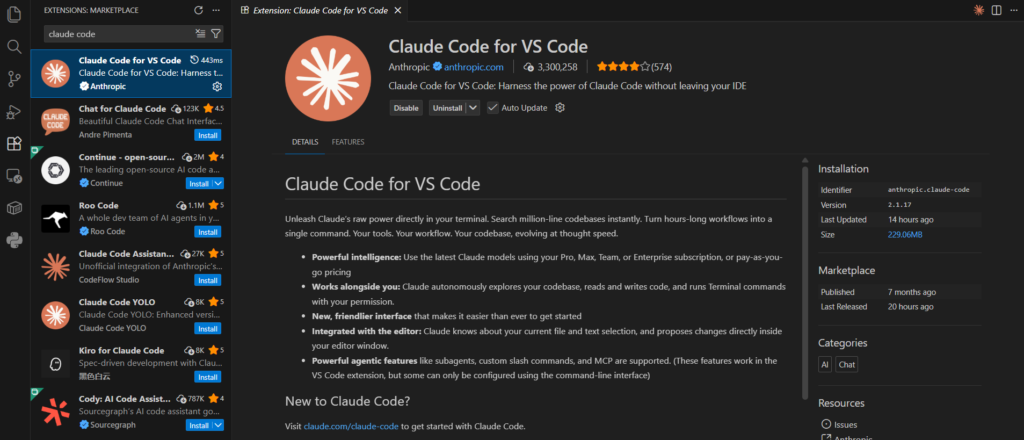
When I first wrote this page, I described the setup I had used in VS Code: Claude Code as the coding interface, with Z.ai behind it because I wanted stronger codebase assistance than my local Ollama setup was giving me. That workflow is still relevant. What has changed is the recommended route: global users should now start with the international Z.ai Coding Plan and its current supported endpoint instead of the older China-focused BigModel install guidance.
Z.ai’s current quick-start also warns that Coding Plan keys are plan-specific and that the Coding Plan should be used only through officially supported tools and products. In other words, do not assume an old generic Z.ai API key, a China-only BigModel key or a pay-as-you-go endpoint will consume your Coding Plan credits.
Side-by-Side Comparison
| Category | GLM Coding Plan | Claude Code |
|---|---|---|
| Provider | Z.ai | Anthropic |
| Current model focus | GLM-5.3 and GLM-5.3-Flash | Claude models available to the user’s plan/account; Anthropic’s current platform lineup includes newer Sonnet, Opus and Fable generations |
| Context | ZCode documents GLM-5.3 with a stable 1M-token context; actual usable context can still depend on the client and workflow | Current high-end Claude models, including Sonnet 5, support a 1M-token context; model availability varies by plan |
| Subscription metering | 5-hour plus weekly credits; model and MCP usage consume credits | Five-hour session plus weekly limits on consumer plans; optional paid usage credits can continue work after included limits |
| Agent compatibility | Multi-tool plan: Claude Code, Cursor, Cline, Roo Code, Kilo Code, OpenCode and others are listed by Z.ai | First-party Claude Code terminal and IDE workflow; Anthropic documents IDE support including VS Code, Cursor/VS Code forks and JetBrains |
| Open weights / local option | GLM-5.3 weights are publicly available under the GLM-5.3 license, but the Coding Plan itself is hosted | Claude model weights are proprietary; Claude Code uses Anthropic or supported cloud/API services |
| Privacy/data terms | ZCode advertises “Default data privacy.” Z.ai’s API DPA says business/enterprise API content is processed in real time and not stored; individual users should review the policy that applies to their account | For consumer Pro/Max, coding sessions can be used for model improvement if the user allows it or in specified safety-review cases. Anthropic says commercial/API inputs and outputs are not used for training by default |
If the choice is specifically between Anthropic’s agent and a different AI editor, AIMEC also has a separate Claude Code vs Cursor comparison.
Coding Performance
There is good evidence that GLM-5.3 materially improved on GLM-5.2 for agentic coding, but the benchmark data needs to be read carefully. AIMEC did not run a new physical benchmark for this refresh.
In Z.ai’s August 14, 2026 launch material, the company reported a 50% improvement over GLM-5.2 on its private Z.ai Code Bench. On public evaluations, Z.ai reported the following changes from GLM-5.2 to GLM-5.3:
| Benchmark | GLM-5.2 | GLM-5.3 |
|---|---|---|
| Terminal-Bench 3.0 | 4.6 | 28.3 |
| DeepSWE v1.1 | 46.2 | 66.9 |
| Agents’ Last Exam | 23.8 | 28.5 |
Z.ai also compared different models on its private Code Bench. At its “High” effort setting, it reported GLM-5.3 at 31.4% with roughly 50K output tokens per task versus Claude Opus 4.8 at 29.5% with 120K. At “Max” effort, however, Z.ai reported Claude Fable 5 at 39.5%, above GLM-5.3’s 34.5%. These figures are useful evidence of the model’s direction, but they are not a universal GLM-vs-Claude verdict: the benchmark is run by Z.ai, effort settings and token budgets differ, and Anthropic’s model lineup has continued to change since the comparison was published.
For more on how to interpret coding-agent evaluations without treating one leaderboard as the whole story, see AIMEC’s AI coding agent benchmarks guide.
Source: Z.ai, “GLM-5.3: Frontier Coding with Emergent Cyber Capabilities,” August 14, 2026.
GLM Strengths
- Lower entry price at the time checked. The displayed promotional Lite price was below Claude Pro’s monthly price, while Z.ai’s listed non-promotional Lite price was also slightly lower.
- Designed for multiple coding agents. The same plan can be used through a range of supported tools rather than only ZCode.
- Current long-context model. ZCode documents GLM-5.3 with a stable 1M-token context aimed at long-running coding work.
- Open weights. Developers that need self-hosting or model-level experimentation have a path that does not exist with Claude’s proprietary weights, subject to the GLM-5.3 license and substantial hardware requirements.
- Off-peak credit economics. Z.ai’s 50% off-peak credit rate can matter for automated or flexible workloads that do not need to run during peak hours.
Claude Code Strengths
- Native Anthropic stack. Claude Code is built by the same company that trains and serves the Claude models, so its model, tooling and product updates are designed together.
- Current Claude model access. Paid plans expose Claude Code with model availability tied to the user’s account, while the API provides explicit model selection and pay-as-you-go billing.
- Long context on current models. Anthropic documents a 1M-token context for current models such as Claude Sonnet 5.
- Mature terminal and IDE workflow. Anthropic supports Claude Code in the terminal and in IDEs including VS Code, Cursor/VS Code forks and JetBrains products.
- Clear commercial API training default. Anthropic states that inputs and outputs from its commercial products and API are not used for model training by default, unless the customer chooses otherwise or explicitly submits feedback.
Which One Makes Sense for Different Developers?
There is no single answer for every developer because the products meter usage differently and solve slightly different problems. A more useful decision framework is:
- Cost-sensitive individual developers: compare the current GLM Lite price and credits with Claude Pro’s monthly price and your actual five-hour/weekly usage pattern. The lower sticker price does not automatically mean more usable work if your tasks consume credits heavily.
- Developers who want to keep Claude Code’s workflow but change the backend: GLM is unusual because Z.ai officially supports the Anthropic protocol and Claude Code as a client.
- Developers who want Anthropic’s latest first-party experience: native Claude Code removes the compatibility layer and keeps model and agent updates inside Anthropic’s stack.
- Open-weight or self-hosting teams: GLM-5.3 gives you a route to model weights. The hosted Coding Plan is still the simpler option for most developers because GLM-5.3 is a very large model.
- Businesses handling sensitive source code: compare the exact account type, data-processing agreement, retention terms, deployment route and contractual controls rather than relying on a generic “private” label.
If you already work in Cursor, the practical question may be less about replacing the editor and more about how you configure its agent and model workflow. AIMEC’s Cursor AI guide covers that side of the decision.
Setup Notes for U.S./Global Users
Older GLM tutorials often mix the China-focused BigModel platform with Z.ai’s international service. For a U.S. or other global user in 2026, the cleanest path is:
- Use the global Z.ai account. ZCode’s current documentation explicitly recommends Z.ai for global users and separates it from BigModel for users in China.
- Subscribe to the current GLM Coding Plan. The relaunched plan uses credits and weekly limits.
- Create the Coding Plan API key. Z.ai says Individual Plan users create the key under Individual Coding Plan > Plan Overview. Keep it out of source code and public repositories.
- Use the Coding Plan endpoint, not an old generic endpoint. For Claude Code and other Anthropic-protocol clients, the current base URL is
https://api.z.ai/api/anthropic. - Configure an officially supported tool. Z.ai’s list includes Claude Code, Cursor, Cline, Roo Code, Kilo Code, OpenCode and others.
- Verify the active model and quota. Model routing and plan limits have changed several times, so screenshots and shell scripts from older GLM-4.x tutorials can be misleading.
The key update from the original version of this page is simple: do not start from the old BigModel-specific installation script if you are a global user. Start from Z.ai’s current international Coding Plan documentation and its supported integration path.
Frequently Asked Questions
Is GLM a drop-in replacement for Claude in Claude Code?
Not completely. Z.ai provides an Anthropic-compatible endpoint and officially supports Claude Code, so the integration can be straightforward. However, GLM and Claude are different models. Their reasoning behavior, tool calling, prompt sensitivity and model-specific features can differ, so protocol compatibility should not be treated as behavioral equivalence.
Which plan is cheaper: GLM Coding Plan or Claude Code?
At the time of this refresh, ZCode displayed GLM Lite at $12.60 per month promotional pricing and $18 as the listed price, while Claude Pro was $20 per month or $200 per year. Higher tiers are not directly comparable because Z.ai uses explicit credits while Anthropic uses plan capacity and usage limits. Compare your likely workload, not only the sticker price.
Can GLM run locally?
Yes. Z.ai has released GLM-5.3 weights, and the model can be deployed through frameworks such as Transformers or vLLM. It is a very large model, so practical local or private deployment requires substantial hardware and engineering. The GLM Coding Plan itself remains a hosted service. Check the GLM-5.3 license before commercial deployment.
Which model does the GLM Coding Plan use?
Z.ai currently lists GLM-5.3 and GLM-5.3-Flash as supported Coding Plan models. Its documentation says requests for GLM-5.2 or GLM-5.1 are routed to GLM-5.3, while GLM-4.7 requests are routed to GLM-5.3-Flash.

Steven Walgenbach is an AI Engineer specializing in AI agents, large language models, retrieval-augmented generation and business process automation. He designs and builds practical AI systems that connect with existing tools, data sources and workflows to help businesses reduce manual work, improve decision-making and scale more efficiently.
His work includes developing multi-agent systems, private and locally hosted AI solutions, custom knowledge assistants, SEO automation pipelines and LLM-powered applications using Python, LangGraph, CrewAI, the OpenAI Agents SDK and other modern AI frameworks.
Through AIMEC, Steven helps businesses move beyond AI experimentation and identify practical opportunities where artificial intelligence can deliver measurable operational and commercial value.